
 PDF Download
 PubReader
 Export Citation
 Email the Author
 Share Facebook
 Share Twitter
 Cited by 0 Article
 Metrics (View:1,229)









I. INTRODUCTION
“Aid with a face”,1) as an important concept in Japan’s foreign aid policy, frequently appeared in the official Japanese documents and policy discussions on aid reforms from the late 1990s to the early 21st century and continues to influence subsequent aid reforms. Former officials of Ministry of Foreign Affairs of Japan (MOFA) Iimura and Sunaga, as well as scholars Lloyd & Ishizuka, have interpreted the connotation of the “aid with a face” concept, noting that it has become a semi-official slogan of the Japan International Cooperation Agency (JICA) (Iimura, 2000). Its essence lies in linking aid to national interests (Sunaga, 2004), aiming, on one hand, to enhance Japanese public support for foreign aid by disclosing fund usage and expanding volunteer teams, and on the other hand, to shape a more positive image of Japan in recipient countries (Lloyd & Ishizuka, 2007). More scholars have directly applied this concept to their historical and policy analyses of Japanese foreign aid reforms without delving deeply into its conceptual connotation. Neither the concept’s evolution into the 21st century nor its manifestation in specific aid sectors has been sufficiently addressed in existing scholarship, leaving a gap between the concept’s policy significance and its academic examination. This study aims to delineate the origin and connotation of the “aid with a face” concept and, through the lens of foreign aid for education,2) examine how this concept guides and manifests in Japan’s policy design and project implementation. In doing so, this study makes three contributions to the existing literature: it offers a systematic account of the conceptual evolution of “aid with a face” from its origins through the 21st century; it proposes a three-dimensional analytical framework—comprising accountability, effectiveness, and strategic intent—that systematizes the concept’s connotation; and it demonstrates, through five institutional mechanisms in the education sector, how this policy concept is operationalized in practice, yielding findings that are potentially transferable to understanding Japan’s foreign aid strategy more broadly and to comparative analysis of other donor countries. This study adopts a historical policy analysis approach. The primary sources consist of official Japanese government documents, including Official Development Assistance (ODA) charters, Medium-Term Policies on ODA, country-specific development cooperation policies, JICA position papers, and policy evaluation reports, covering the period from the 1990s to the present. These are supplemented by scholarly literature in Japanese, Chinese, and English. The education sector is selected as the focal field because it represents one of the most institutionally developed and well-documented areas of Japan’s foreign aid practice, making it particularly well suited for tracing how a broad policy concept translates into concrete institutional arrangements and program design. In the current context of turbulent international landscape, expanding aid funding gaps, increased self-interest tendencies among traditional donor countries, and rise of South-South cooperation as a new driver of international development cooperation, how to make aid serve national strategic interests while maintaining development effectiveness and winning public support both domestically and abroad has become a common challenge faced by all countries. As a major donor country that has systematically promoted the strategization and visualization of aid, Japan’s two-decade-long exploratory journey provides a longitudinal and panoramic illustration of this global challenge.
II. THE ORIGIN OF THE “AID WITH A FACE” CONCEPT
In 1954, under the instruction of the United States, Japan joined the Colombo Plan and officially became a donor country. Japan’s early foreign aid activities primarily served the purposes of war reparations, economic revitalization, and following allies. Its aid form mainly consisted of tied loans, meaning loans had to be used to purchase Japanese goods and services. Its aid approach was “request-based”, meaning the Japanese government provided aid based on plans requested by recipient countries rather than proposing its own initiatives, reflecting Japan’s post-war non-interventionist diplomatic stance and its respect for recipient countries’ sovereignty and development priorities. Entering the 1970s, the oil crisis, Nixon’s New Asian Policy, and anti-Japanese sentiment internationally added new purposes to Japan’s foreign aid, including securing resources, filling the power vacuum left by the US in Southeast Asia, and strengthening relations with trade partners. The leadership of Japan’s foreign aid policy shifted from the Ministry of International Trade and Industry (MITI) to the MOFA (Yu, 1999). The significance of foreign aid as a tool to counter international anti-Japanese sentiment increased.
In 1970, Japanese Prime Minister Satō delivered a speech at the 25th-anniversary commemorative session of the United Nations, stating: Japan has no intention of developing armaments and is determined to utilize the surplus from its economic growth for world peace construction. Japan attaches importance to providing economic cooperation to developing countries (Satō, 1970). In 1972, the Japanese government announced the untying of loans at the third United Nations Conference on Trade and Development (UNCTAD) meeting. In 1977, Japanese Prime Minister Takeo Fukuda proposed the ODA Doubling Plan during a visit to Southeast Asia. Amidst a wave of anti-Japanese sentiment in the 1980s, Japan became the world’s top aid donor in 1989. Japanese loans were largely untied, and Japan’s foreign aid no longer concentrate on boosting exports but became a tool to showcase Japan’s international contributions (Imazu, 2009).
Japan’s foreign aid policies prior to the 1990s, while serving various political and economic interests, lacked a coherent overarching philosophy and were largely reactive in their official justification. Although Prime Minister Masayoshi Ōhira proposed in the early 1980s that Japan needed to get proactively involved in international affairs (Diet Proceedings Database, 1980), and the Comprehensive National Security Strategy issued in 1980 identified foreign aid as a crucial tool for Japan’s comprehensive security (Yamaguchi, 2014), the Japanese government persistently justified its aid programs on grounds of humanitarianism and international responsibility. This stance was adopted because politicizing foreign aid remained domestically sensitive and was perceived as incompatible with Japan’s “Peaceful Nation” image. In the international aid community, where national interest was paramount, Japan’s position appeared deviant and thus drew bewilderment and even derision [Ōkuma, 1999]. “Faceless Japan” was one such term of derision.
During 1990s, Japan’s foreign aid policy underwent significant changes. In 1991, the Gulf War broke out. Japan provided a massive $13 billion in financial aid to the US-led multinational forces and surrounding countries but did not receive corresponding international recognition. Japan’s foreign aid was criticized as “all money, no manpower” and “lack of guiding principles” (MOFA, 2004: 47). The status as a major aid donor coupled with the bitter lesson from the Gulf War drove the Japanese government to reconsider its foreign aid policy. In the government discussions between 1990 and 1992, the terms “faceless Japan” and “international contribution” appeared frequently (Ōyama, 2021). A broad consensus was that Japan attracted international criticism due to the lack of clear national objectives and a coherent philosophy. The previous request-based foreign aid policy was no longer suited to the new international environment. Japan needed to participate in international affairs more proactively and utilize foreign aid more strategically, turning it into a diplomatic trump card (Ōyama, 2021).
In 1992, the Japanese government issued its first ODA Charter, which preliminarily defined the principles and philosophy of Japan’s foreign aid. In the following years, the collapse of the bubble economy placed immense pressure on Japan’s foreign aid expenditures. In December 1994, the Fiscal System Council noted that, “given the unprecedented severity of fiscal situation, rather than pursuing quantitative increases in foreign aid, greater emphasis should be placed on prioritizing aid content, enhancing its effectiveness, and improving efficiency in implementation” (Fiscal System Council, 1995: 278). In 1997, Prime Minister Ryutaro Hashimoto announced cuts to the foreign aid budget. Following Prime Minister Hashimoto’s directive for a comprehensive review of foreign aid, the Economic Planning Agency, MITI, and MOFA each organized panels of experts and scholars to deliberate on reform measures.
During these discussions, long-standing views from the public sphere—that foreign aid should serve national interests and the people’s interests—were fully reflected. Ideas such as implementing “aid with a face” through measures like re-tying aid and ensuring that Japanese aid is delivered by Japanese personnel were repeatedly emphasized (Editor Department of International Development, 1997). In the Medium-Term Policy on ODA issued in 1998, implementing “aid with a face” became one of the fundamental principles of Japan’s foreign aid, with the stated aim of “securing the support and understanding of the Japanese people and promoting understanding of Japan in recipient countries” (MOFA, 1999). Entering the 21st century, the term “aid with a face” still frequently appears in Japanese foreign aid-related policy documents and seminar reports.
III. THE CONNOTATION OF THE “AID WITH A FACE” CONCEPT
Since its introduction in the 1990s, the connotation of the “aid with a face” concept has been enriched and developed. Overall, the concept encompasses three main dimensions. First, implementing accountable foreign aid to ensure transparency and public scrutiny. As a response to the criticism of “faceless Japan”, the “aid with a face” concept emphasizes the disclosure of aid policies and information. Its purpose is to ensure that recipient countries and the international community have a full understanding of the objectives, philosophy, policies, implementation status, and effects of Japan’s foreign aid, thereby enhancing the presence of Japanese aid. It also seeks to assist the shift from a passive, request-based aid implementation approach to a proactive, proposal-driven model initiated by Japan (Ōkuma, 2006). At the same time, given that foreign aid funds primarily come from taxpayers’ money, the “aid with a face” concept underscores the Japanese government’s accountability to the public. Foreign aid should not serve as a tool for any government department, politician, or company to pursue their own interests (Policy Initiative Forum, 2001). It must be implemented reasonably in a manner acceptable to taxpayers, who have the right to be informed.
Second, implementing effective foreign aid to achieve intended development outcomes sustainably and efficiently. The presence of Japan’s foreign aid cannot rely solely on the scale of funding or the number of Japanese companies and products at aid sites. The quality of aid is equally important. Emphasis must be placed on the tangible impact of aid projects on the sustainable economic development of recipient countries, on providing Japanese citizens with direct opportunities to participate in aid activities, on facilitating the transfer of technology and knowledge through human exchange, and on delivering timely assistance to developing countries in emergency situations (Policy Initiative Forum, 2001). Against the backdrop of economic stagnation and tightening aid budgets, improving the effectiveness and efficiency of aid implementation has become a central priority in Japan’s foreign aid reforms. Efficient foreign aid not only fosters a sense of recognition toward Japan’s assistance among recipient countries and the international community, helping to establish Japan’s leadership in the global aid arena, but also helps to secure greater domestic support for Japan’s foreign aid endeavors.
Third, implementing strategic foreign aid to align aid with Japan’s diplomatic, security, and economic interests. Japan’s foreign aid has, from its inception, served political and economic purposes such as promoting Japan’s economic development, maintaining alliance relations, and shaping the image of a peaceful nation. However, the Japanese government long avoided discussing the relationship between foreign aid and national interests, and instead used euphemistic rhetoric such as humanitarianism, philanthropism, and interdependence to obscure reality (Ōkuma, 2006). Since the 1990s, the articulation of foreign aid strategy in official Japanese government documents has become increasingly specific and explicit, with foreign aid becoming a key component of the national security and economic development strategies of successive administrations. In the 2015 Charter, the Japanese government stated that the purpose of foreign aid is to “ensure Japan’s peace and security, achieve Japan’s further prosperity, establish a highly stable, transparent, and predictable international environment, and maintain an international order based on universal values” (MOFA, 2015). In terms of implementation principles, the Japanese government also proposed shifting from a “request-based” approach to a “proposal-based” or “co-creation-based” model (MOFA, 2015). In the new 2023 Charter, the Japanese government declared that “foreign aid is the most important diplomatic tool” and that it must be “implemented more strategically, continuously, and effectively” (MOFA, 2023).
IV. THE PRACTICE OF FOREIGN AID FOR EDUCATION “WITH A FACE”
The three dimensions outlined above—accountability, effectiveness, and strategic intent—do not operate in isolation in practice. Rather, they manifest through an interlocking set of mechanisms that often serve multiple dimensions simultaneously. This section examines five such mechanisms through which the Japanese government has operationalized “aid with a face” in the field of aid for education. Institutional streamlining and evaluation reform primarily serve effectiveness, while publicity efforts and information disclosure are most directly oriented toward accountability. Policy clarification and multi-stakeholder participation serve all three dimensions—making aid more strategically coherent, operationally efficient, and publicly accountable. As each of the following mechanisms is examined, the reader is invited to bear these mappings in mind: the subsections are organized thematically, but their analytical significance lies in how each concretely operationalizes one or more of the three dimensions of “aid with a face.”
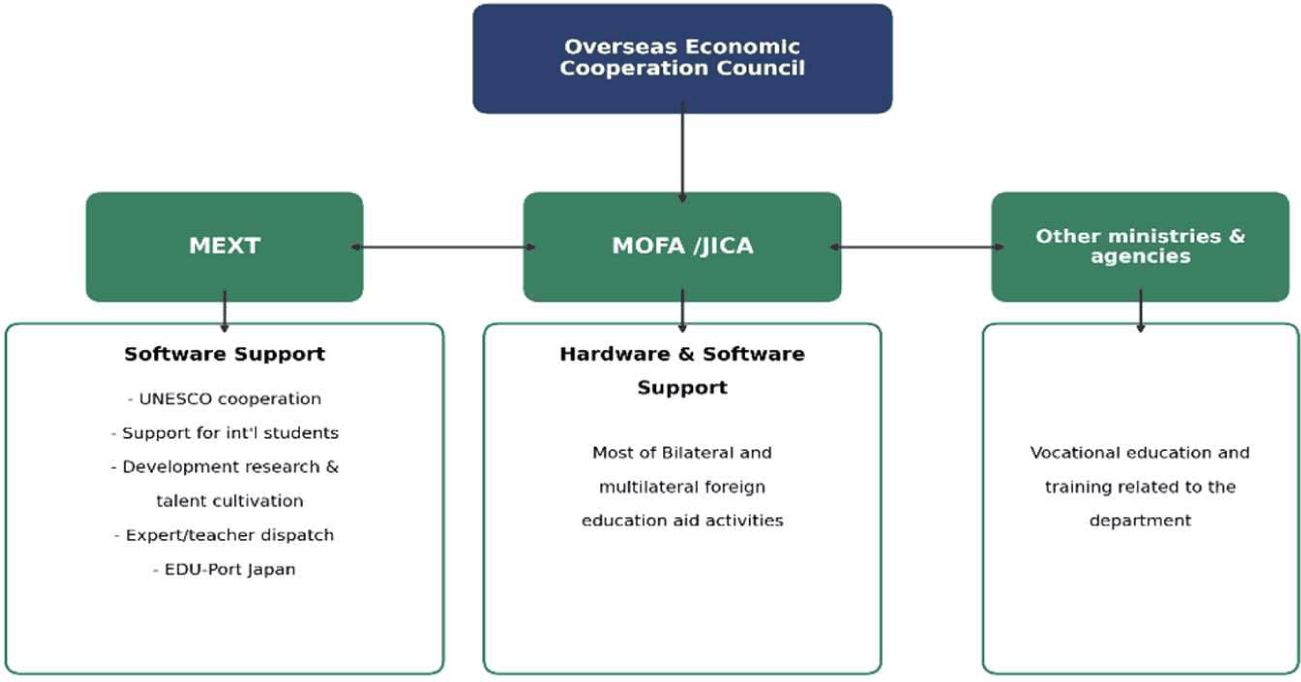
Japan’s foreign aid for education activities were initially implemented separately by over ten ministries and agencies, including MITI, MOFA, the Ministry of Agriculture, Forestry and Fisheries (MAFF), the Ministry of Education, Culture, Sports, Science and Technology (MEXT), the Ministry of Posts and Telecommunications (MPT), the Ministry of Transport, and the Ministry of Health and Welfare (Kamibeppu, 2016). In 1962, the Japanese government established the Overseas Technical Cooperation Agency (OTCA) under MOFA to coordinate most bilateral technical aid activities of various ministries. This organization was reorganized into the JICA in 1974. MEXT, due to differences in aid philosophy with other ministries and inter-departmental power competition, failed to secure a place in either of these two organizations and thus was unable to exert significant influence (Kamibeppu, 2016).
Japan’s foreign aid for education activities were operated under a dual system: ministries such as MOFA, MITI, MAFF, and MPT primarily handled educational aid related to war reparations and bilateral/multilateral technical aid, such as vocational training and infrastructure development, while MEXT was mainly responsible for UNESCO-related educational aid activities and the recruitment of degree-seeking international students (Saitō, 2008). Cooperation between the two systems was very limited, primarily confined to the selection of experts, and MEXT did not have the authority to decide on expert appointments (Saitō, 2008).
In 1990, the United Nations Development Programme (UNDP) introduced the “Human Development Index”, which elevates the importance of education in development agendas. In the same year, the World Conference on Education for All shifted the focus of international educational aid towards basic education. Japan’s existing foreign aid for education system was unable to effectively mobilize domestic resources to meet the new demands of educational aid. This led to a thaw in relations between MEXT and JICA, with both sides engaging in more active cooperation in areas such as personnel exchanges, educational assistance policy formulation, international development talent cultivation, and the dispatch of experts and in-service teachers.
In 2003, the Japanese government transformed JICA into an Independent Administrative Institution (IAI) to facilitate its obligations in information disclosure and performance evaluation, thereby increasing the efficiency and transparency of foreign aid and garnering greater public support (Sunaga, 2004). In 2006, the Japanese Cabinet established the Overseas Economic Cooperation Council, consisting of the Prime Minister, the Chief Cabinet Secretary, the Minister for Foreign Affairs, the Minister of Finance, and the Minister of Economy, Trade and Industry, to set comprehensive strategies and basic policies for foreign aid. Under the leadership of this Council, MOFA became the core administrative body for Japan’s foreign aid, responsible for planning and formulating aid policies, coordinating with other ministries and agencies, and managing grant aid operations. Through these reforms, the Japanese government alleviated the problems of low decision-making efficiency and inadequate reflection of overall national interests caused by dispersed jurisdiction (Wang & Yang, 2020).
In 2008, the Japanese government further merged the yen loan department of the Japan Bank for International Cooperation (JBIC), MOFA’s grant aid department, and JICA to achieve four objectives (Prime Minister’s Office of Japan, 2006): 1) Strengthening linkages between various operations to enhance aid effectiveness; 2) Cultivating personnel proficient in all aspects of foreign aid; 3) Improving JICA’s international competitiveness and visibility; 4) Facilitating understanding of Japan’s foreign aid both domestically and internationally, particularly in recipient countries. The integrated JICA became the core implementing agency for Japan’s foreign aid. Its scope of operations includes yen loan activities, approximately 70% of grant aid operations (Huang & Meng, 2011), and about 60% of technical assistance operations (Prime Minister’s Office of Japan, 2006).
During Shinzo Abe’s administration, by incorporating foreign aid policy into the national security strategy framework and controlling the appointment authority of the JICA President, the influence of the Prime Minister and the Cabinet was further strengthened (Zhao, 2018). In recent years, the Japanese government has also attempted to grant more policy-making and implementation authority to the grassroots level. For example, it has organized task forces comprising embassies abroad, field offices of aid agencies, local Japanese companies, and Japanese Non-Governmental Organizations (NGOs) to formulate country-specific aid policies and project plans, and to conduct aid evaluations (MOFA, 2020).
Through a series of reforms, Japan’s foreign aid for education system has become more integrated, forming a parallel system led by MOFA with the participation of other ministries and agencies (<Figure 1>). In addition to communicating policies through regular meetings, the ministries and agencies also delegate tasks to each other as needed.
Japan’s foreign aid for education policy framework is hierarchical (<Figure 2>). At the top are the ODA Charters. The medium-term policies are developed based on it. These top policies outline the basic philosophy, key issues, regional strategies, implementation principles, and institutional arrangements for Japan’s foreign aid during different periods. Since 1992, the Japanese government has issued four charters and two medium-term policies. According to these documents, foreign aid for education serves as an important tool for advancing Japan’s two fundamental aid principles—“self-help” development and “human security”—and is a branch of key themes such as “sustainable growth”, “high-quality growth”, and “poverty reduction”.
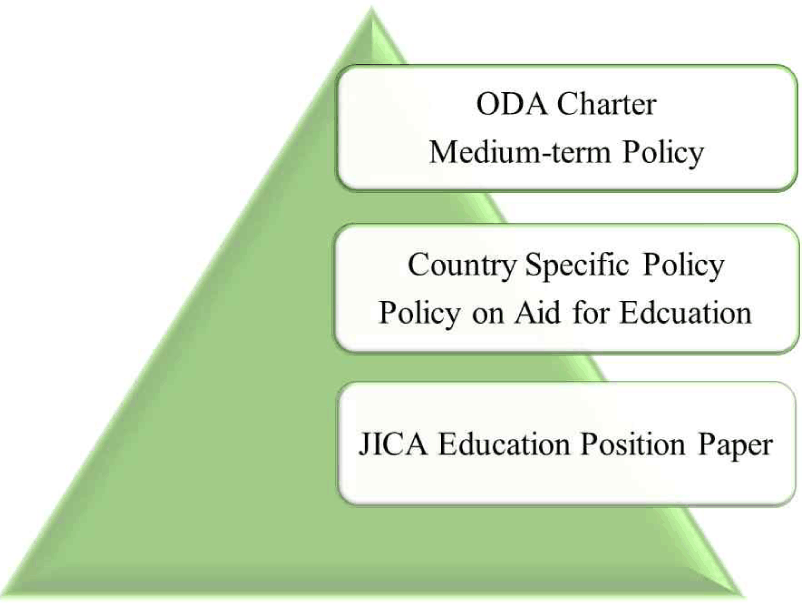
Below the top-level policies are country-specific aid policies and education aid policies. To enhance transparency in project selection and promote the consistency and coherence of government policies, the Japanese government began formulating Country Aid Plans for major recipient countries every five years starting in 1998. These plans elaborate on Japan’s objectives, strategic significance, priority areas, key issues, and implementation considerations for aid in each country. In 2010, the Country Aid Plan was renamed the Country Aid Policy, with plans to develop such policies for all recipient countries. In 2015, the Country Aid Policy was further renamed the Country Development Cooperation Policy. To date, the Japanese government has formulated Country Development Cooperation Policies for 132 countries (MOFA, 2022b), each accompanied by an annually updated Project Implementation Plan. For the African region, the Japanese government has consistently held the Tokyo International Conference on African Development (TICAD) since 1993. Japan’s aid policies for Africa announced at this conference serve as guiding documents for education aid to Africa.
Unlike country-specific aid policies, Japan’s policies on aid for education are released irregularly based on changes in international trends in aid for education and the evolution of Japan’s own aid practices and philosophy. These policies are often announced at significant international events to garner greater global attention. In 2002, integrating the core elements of the United Nations Millennium Development Goals, the Dakar Framework for Action, and the Fast Track Initiative for Education for All with Japan’s own aid philosophy and experience, the Japanese government launched the Basic Education for Growth Initiative (BEGIN) at the G8 Summit in Canada. BEGIN clarified Japan’s priorities in basic education aid, including expanding access to education, improving education quality, and enhancing education management (MOFA, 2002b).
In September 2010, at the United Nations Millennium Development Goals Review Summit, the Japanese government released the Japan’s Education Cooperation Policy 2010–2015, outlining its priorities in basic education, vocational education, higher education, and education in conflict- and disaster-affected countries (MOFA, 2011). In 2015, coinciding with the release of the United Nations Sustainable Development Goals, the Incheon Declaration, and the Education 2030 Framework for Action, the Japanese government revised the ODA Charter and announced its new overarching policy on foreign aid for education, the Strategy on Education for Peace and Growth, at the United Nations Sustainable Development Summit. Additionally, Japan spearheaded the adoption of the United Nations Decade of Education for Sustainable Development (2005–2014) by the UN in 2005. Although this is an international organization policy, the Japanese government was the proposer and primary promoter of the concept.
At the implementation level, JICA formulates position papers on aid for education based on newly released government policies. In 2010 and 2015, JICA issued two position papers respectively, outlining its objectives in aid for education, implementation methods, and priority areas. In 2007, 2015, and 2021, MOFA commissioned third-party evaluations of its three major policies on aid for education. The results indicated that Japan’s policies on aid for education in general maintained high consistency across the top, middle, and implementation levels and aligned well with international frameworks for education development (MOFA, 2008, 2016, 2022a).
As early as 1998, the Japanese government emphasized in its Medium-Term Policy on ODA the need to promote public participation to implement “aid with a face” (MOFA, 1999). At the second ODA reform symposium hosted by the MOFA (2002a), public participation became a central topic, marking Japan’s entry into an era of public involvement in foreign aid (MOFA, 2002a). At the Overseas Economic Cooperation Seminar organized by the Cabinet in 2006 and the Foreign Aid Implementation Methods Symposium held by the MOFA (2010), the Japanese government further proposed that Japan should strengthen cooperation among related institutions and adopt a “whole-of-Japan approach” to address emerging challenges in foreign aid (MOFA, n.d.). In the ODA Charters issued in 2015 and 2023, the government consistently highlighted the importance of private sector involvement in enhancing the effectiveness and competitiveness of Japan’s foreign aid.
In the education sector, the Japanese government currently focuses on multi-faceted cooperation with NGOs, enterprises, local governments and academic institutions in areas of project implementation, funding support, capacity building, and policy communication (<Figure 3>).
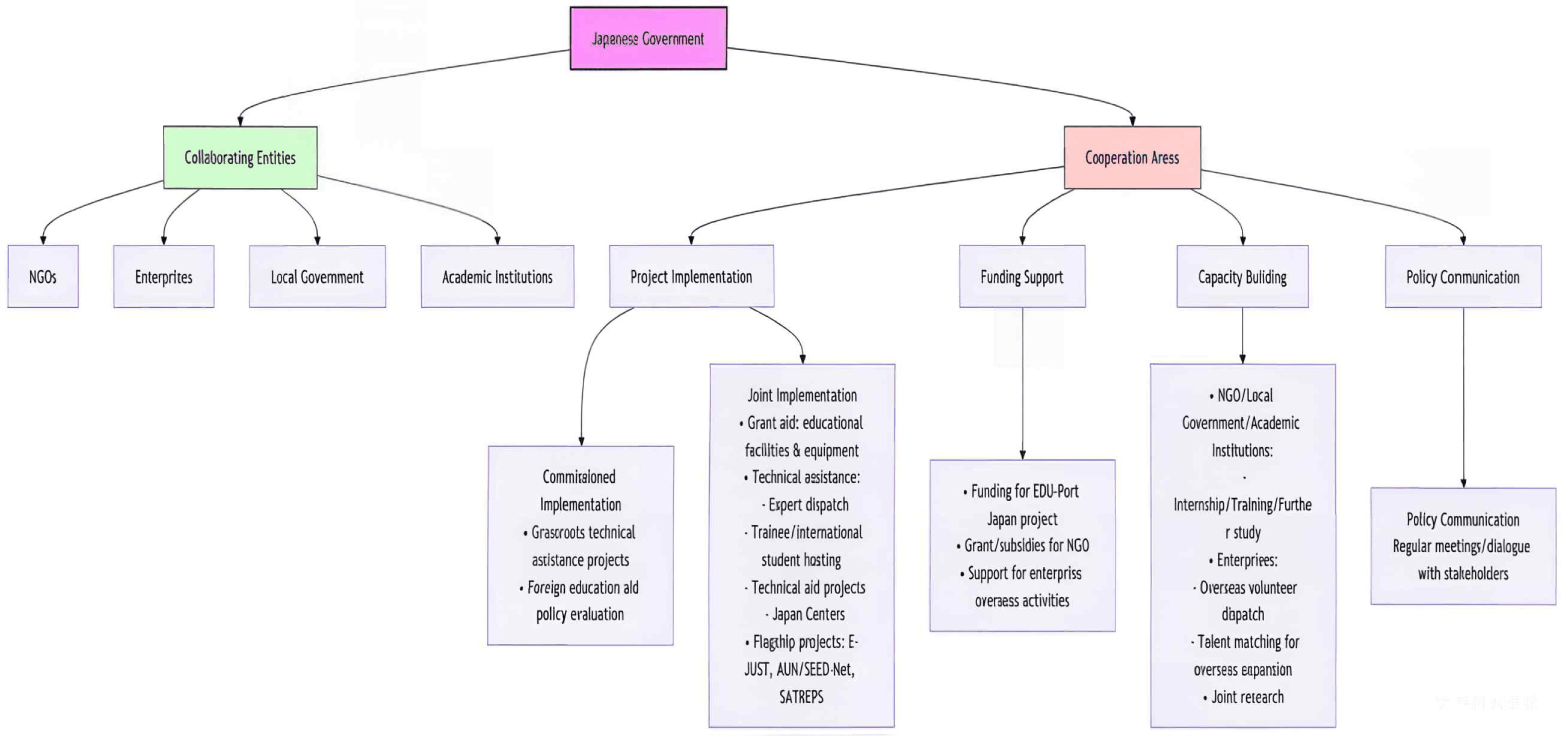
The Japanese government entrusts NGOs, local governments, and academic institutions with implementing grassroots technical aid projects. It collaborates with NGOs, enterprises, local governments, and academic institutions on grant aid projects, including the construction of educational facilities and the procurement of equipment. It also partners with these entities to implement technical aid projects, such as dispatching experts, hosting trainees and international students, carrying out technical aid initiatives, and establishing Japan Centers. Notable examples include the Egypt-Japan University of Science and Technology (E-JUST), the ASEAN University Network/Southeast Asia Engineering Education Development Network (AUN/SEED-Net), and the Science and Technology Research Partnership for Sustainable Development (SATREPS). Additionally, the government commissions academic institutions to evaluate its policies on aid for education.
The Japanese government provides partial funding for projects like the Japanese-Style Education Overseas Promotion Project (EDU-Port Japan) implemented by schools (including academic institutions), enterprises, local governments, and NGOs. It offers grant funding to NGOs for education aid projects that align with Japan’s foreign aid policies, such as the Country Development Cooperation Policy. It also provides subsidies for NGOs’ planning, research, and evaluation of foreign aid for education, as well as for seminars and lectures held domestically or abroad. Furthermore, the government funds Japanese enterprises’ overseas market research, promotion, and pilot activities in the education sector, supports their overseas investment investigations, and provides financing for their investments.
The Japanese government offers opportunities for NGO staff, local government employees, and students engaged in development studies and research at academic institutions to participate in internships, training, or further education at domestic or international aid/education institutions. It facilitates enterprise employees’ volunteer work in countries where their companies plan to expand operations, connects companies with suitable Japanese or local talent for overseas business expansion, and conducts research on issues related to NGO and local government participation in foreign aid, sharing the findings with these stakeholders. The government also participates in foreign aid research associations formed by academic institutions and collaborates with them to organize foreign aid seminars and lectures.
The Japanese government maintains dialogue with various institutions through regular meetings, solicits broad input from the private sector, and ensures that such input is reflected in foreign aid policies. Beyond institutional engagement, the government actively develops overseas volunteer programs and encourages ordinary citizens to contribute to foreign aid for education efforts.
To date, the Japanese government has established a two-way, mutually beneficial network encompassing public-private partnerships and private-private collaborations. Through these collaborations, the government has achieved improvements in aid effectiveness and efficiency, shared aid burdens, and enhanced public understanding of aid. In turn, the private sector has advanced its own international development through participation in foreign aid.
The Japanese government places great emphasis on promoting its foreign aid initiatives. It has designated October 6 as International Cooperation Day and hosts events like GLOBAL FESTA to increase the visibility of its foreign aid efforts. Additionally, the government strengthens foreign aid publicity through the following four approaches:
To enhance young people’s understanding of foreign aid, MOFA and JICA regularly organize online and in-person outreach sessions at domestic educational institutions and NGOs, featuring government staff, experienced aid practitioners, and foreign trainees in Japan. They also provide opportunities for students and teachers to visit JICA offices or participate in overseas training programs. Competitions such as essay contests on foreign aid for middle school students and education contests on foreign aid are also organized. Over the past decade, MOFA has conducted 318 in-person outreach sessions, while JICA organized 1,600 online and in-person sessions in 2013 alone, with approximately 140,000 participants (MOFA, 2025).
The Japanese government consistently works to promote its foreign aid through television, newspapers, magazines, social media, and other channels to deepen public understanding and support. MOFA publishes the White Paper on Development Cooperation annually, explaining the domestic and international context of Japan’s foreign aid, its future direction, and reviewing the government’s measures and achievements across various fields and regions in the previous year. MOFA and JICA also produce their own e-magazines on foreign aid, sharing the experiences of overseas staff and aid-related personnel. Japanese embassies abroad actively coordinate field visits for local media to Japanese development projects to enhance the visibility of Japan’s aid through local news coverage. They also produce brochures systematically outlining bilateral cooperation history, principles, and specific project examples. These materials are distributed to government officials, media, and other stakeholders in partner countries, accompanied by thematic video content. In recent years, MOFA has increasingly focused on using audiovisual productions for aid publicity, commissioning documentaries, TV dramas, talk shows, and animations such as Japanese Women Active in Turbulent Nations, Japanese People Shaping the World, The First Step, and Eagle Talon Squadron: ODA Rangers, Go! These works are broadcast on multiple platforms to engage public interest.
The websites of MOFA and JICA play a central role in information disclosure. MOFA’s website primarily provides macro-level information on foreign aid, including its history, achievements, budget, policies, project details, evaluation reports, and survey findings. JICA’s website focuses on project implementation information, such as project overviews, outcomes, evaluations, survey reports, public engagement methods, and JICA position papers. Both websites are designed to be user-friendly, visually engaging, and comprehensive, with easy-to-navigate information systems. They offer multilingual services and are linked to social media platforms like Facebook and Twitter.
Domestically, the Japanese government organizes briefing sessions for businesses and NGOs on leveraging foreign aid for their development, public seminars on foreign aid trends and Japan’s strategies, and roundtable discussions involving local governments, industries, universities, schools, and other stakeholders to disseminate aid-related information across society. Internationally, the government actively participates in and hosts dialogues with other donor countries and international aid organizations. It uses international conferences to announce foreign aid initiatives, declarations, and policies, thereby building Japan’s influence and discourse in the field of foreign aid.
To enhance the effectiveness and efficiency of foreign aid implementation and to earn the trust of the Japanese public and recipient countries (MOFA, 2021), the Japanese government continuously refines its foreign aid evaluation system. In the field of foreign aid for education, MOFA is responsible for evaluating policies on aid for education and country-specific policies. In accordance with the Policy Evaluation Act enacted in 2001, MOFA also conducts ex-ante evaluations for grant aid projects exceeding 10 billion yen and ex-post evaluations for projects that have not commenced within five years or been completed within ten years (MOFA, 2021). JICA is responsible for evaluating education aid projects, including individual project evaluations and thematic evaluations (which involve cross-cutting assessments of multiple projects under a specific theme). The two agencies have clearly defined roles and produce separate annual evaluation reports. While over a dozen other government departments and agencies involved in foreign aid for education also conduct independent evaluations, the results of which are consolidated by MOFA in its annual evaluation report.
To ensure the timeliness of evaluations and their utility in guiding policy and project implementation, both MOFA and JICA adopt the Plan-Do-Check-Act (PDCA) cycle. Evaluations or monitoring are conducted during the formulation, implementation, and review stages of foreign aid policies and projects. Feedback is incorporated into policy-making and project execution through meetings and feedback reports. To facilitate public understanding of the outcomes of Japan’s foreign aid and the government’s policy improvements based on evaluations, all evaluation and feedback reports are published on the websites of MOFA and JICA.
To ensure objectivity and transparency, both MOFA and JICA employ a combination of internal and external evaluations. Internal evaluations are conducted by their respective evaluation departments and focus primarily on the formulation and implementation stages of aid policies and projects. External evaluations are commissioned to consulting firms selected through competitive bidding, with oversight and guidance from external experts, and are mainly conducted during the review stage after project completion. Additionally, MOFA may, as appropriate, commission recipient country governments or institutions to conduct evaluations or collaborate with other donor countries, international organizations, NGOs, and other entities on joint evaluations. JICA regularly convenes an External Expert Committee for Project Evaluation, consisting of external experts, to solicit advice on evaluation systems and guidelines. The bidding process for external evaluations and related contracts are fully disclosed online for public oversight.
Regarding evaluation criteria, MOFA primarily assesses foreign aid for education policies and projects from development and diplomatic perspectives. Developmentfocused evaluations include three criteria: relevance of policies, effectiveness of outcomes, and appropriateness of processes. Diplomacy-focused evaluations include two criteria: diplomatic importance and diplomatic effectiveness. JICA evaluates foreign aid for education projects mainly based on the Development Assistance Committee (DAC) criteria, which include relevance, coherence, effectiveness, efficiency, impact, and sustainability. Both agencies pay attention to whether policies and projects in aid for education align with Japan’s ODA Charters, country-specific policies, and other foreign aid policies; whether they meet the development needs and plans of recipient countries; whether they align with international frameworks and trends in foreign aid for education; whether they complement and harmonize with other aid initiatives or policies of other donor countries; whether they leverage Japan’s comparative advantages; whether they achieve aid objectives with sustainable effects; and whether they employ reasonable formulation and implementation processes.
V. CONCLUSION
This study traces the origin and connotations of the concept of “aid with a face” and systematically examines its practice in the field of aid for education. It reveals that Japan’s foreign aid underwent a profound strategic transformation after the 1990s. At the core of this transformation was the attempt to reshape aid from an international contribution based on the request principle into an active policy tool that serves clear national interests. Japan’s two-decade journey in pursuing this transformation has been a complex process of grappling with internal contradictions and external constraints. The core tensions faced by Japan—between strategic demands and development ethics, between efficiency orientation and inclusive participation, and between national narratives and local perceptions—are not unique to Japan but represent universal challenges in the evolution of the global aid system. At its core, Japan’s experience raises a question that is relevant to all donor countries: how to construct a philosophy of aid governance that possesses both strategic awareness and a steadfast commitment to development.
This study has several limitations that point toward directions for future research. First, the analysis is confined to the education sector, which, while well-documented and institutionally mature, may not be fully representative of Japan’s foreign aid practice as a whole. Other sectors such as infrastructure, health, and disaster relief may exhibit different dynamics in how the “aid with a face” concept is operationalized, and future research could extend this analysis accordingly. Second, the study focuses on policy design and institutional arrangements rather than on actual developmental outcomes; the long-term effects of Japan’s approach on recipient countries remain an important and largely open empirical question. Third, this study examines Japan as a single donor country. Future research could apply this study’s analytical framework comparatively to examining whether and how other major donor countries have undergone similar processes of aid strategization and visualization, and what structural or contextual factors account for differences across cases.

