
 PDF Download
 PubReader
 Export Citation
 Email the Author
 Share Facebook
 Share Twitter
 Cited by 0 Article
 Metrics (View:1,173)









I. INTRODUCTION
The concept of development has long been dominated by economic interpretations that equate progress with economic growth. Early theories assumed that the individual pursuit of profit would eventually benefit the broader population, producing a trickle-down effect (Dang & Sui Pheng, 2015). This view has proven limited, as economic growth alone has not resolved persistent inequality nor addressed social exclusion or institutional fragility (Engelhard, 1983). Over the past two decades, development theories and practices have shifted toward a multidimensional understanding of well-being that recognizes the interdependence of economic, social, environmental and institutional factors. This normative shift, institutionalized through the Millennium Development Goals (MDGs) and deepened by the Sustainable Development Goals (SDGs), places partnership at the center of implementation, coordination, and accountability for sustainable development (Jones, 2006).
The complex and interconnected nature of contemporary global challenges, ranging from climate change to protracted displacement, makes unilateral decisions inadequate and requires collaborative solutions that transcend national and sectoral boundaries (Pryshlakivsky & Searcy, 2012). Multistakeholder Partnerships (MSPs) have therefore become a core governance device that mobilizes and aligns heterogeneous actors (state, market, and civil society) around shared objectives. SDG 17 codifies this shift by explicitly acknowledging partnerships as both a means and an end to achieving sustainable development. Yet the promise of MSPs is tested most in humanitarian settings, where institutions are often weak, resources are scarce, and actors are motivated by divergent values and timeframes. In these environments, MSPs can play an essential role in bridging humanitarian and development objectives by providing immediate relief while sustaining long-term capacity building. However, in such environments, effective cooperation depends less on formal authority than on how actors manage legitimacy, motivation, and coordination over time.
A good example of protracted crisis can be found in the north of Africa. Since the mid-1970s, the Sahrawi refugee population has lived in camps near Tindouf, Algeria, following Spain’s withdrawal from Western Sahara and the subsequent territorial dispute with Morocco (Milán & María, 2007; Ruiz-Miguel, 2022). Nearly fifty years later, approximately 180,000 Sahrawi refugees remain in protracted displacement with limited access to basic services and livelihood opportunities (Polisario, 2023). The harsh desert conditions, with temperatures reaching 50°C during summer, place particular strain on children.
Spain has retained historical and moral ties with the Sahrawi population. Although national-level diplomatic engagement is constrained by relations with Morocco, Spanish regional governments, civil society organizations, and private contributors continue to support humanitarian initiatives. A durable expression of this solidarity is the Vacaciones en Paz (VeP-“Holidays in Peace”) program, which, since the late 1970s, has enabled thousands of Sahrawi children to spend the summer with Spanish host families. These stays provide medical examinations, nutritional support, and educational opportunities unavailable in the camps (CEAS, 2023). Over time, VeP has evolved from a volunteer initiative into a coordinated multilevel network linking Sahrawi institutions with Spanish public, civic, and private actors in an enduring MSP that bridges humanitarian relief and development cooperation.
Despite its long-term success, VeP has received limited scholarly attention as a partnership model in the literature. Existing research of Education in Emergencies (EiE) has tended to focus on program outputs or global coordination structures, while MSP literature still privileges international “platform” initiatives. Less attention has been paid to community-anchored partnerships that endure for decades on modest budgets and strong relational ties. Examining how such a partnership functions, in terms of who participates, why they stay, and how they coordinate, can illuminate mechanisms that enable durable cooperation under resource and legitimacy constraints.
Guided by these gaps, this study attempts to address three main questions:
-
Which stakeholders participate in Vacaciones en Paz, and how have their roles evolved over time?
-
What motivates different actors to remain engaged in the partnership, and what legitimacy foundations sustain that engagement?
-
Which coordination mechanisms and challenges characterize the partnership’s continuity over time?
This article’s objective is to analyze VeP as a MSP for EiE. By examining the case through the lenses of stakeholder and legitimacy theories, this study aims to identify the dynamics that explain the persistence and adaptability of the partnership. Although VeP is national in scope, this article focuses on the program in Illes Balears (Spain), one of the longest and most consistent regional branches. The Balearic case is analytically strategic for three reasons. First, participation has been continuous, enabling longitudinal observation across multiple political cycles. Second, the region generates rich public documentation (NGO reports, Corporate Social-Responsibility [CSR] notes, and government grant records) that supports triangulation. Third, as an island region with a dense civic sphere and strong health system, Illes Balears offers a distinctive setting to observe coordination among local, regional, and national levels and with Sahrawi authorities. Using longitudinal documentary evidence (2011–2019) from this region, we can see that legitimacy diversity (procedural/pragmatic for public actors, moral/relational for civil society, reputational for private firms), motivational complementarity, and adaptive, light-touch coordination jointly produce partnership resilience. The article contributes by (i) offering empirical evidence from a rarely examined, community-based initiative in a refugee context; (ii) clarifying how legitimacy and motivation interact to sustain coordination where formal authority is limited; and (iii) proposing feasible design lessons for decentralized cooperation that link humanitarian and development objectives.
II. THEORETICAL BACKGROUND
The concept of stakeholders emerged from management and organizational studies to understand how multiple actors influence and are influenced by institutional decision-making (Freeman, 2010). Stakeholder theory argues that organizations do not operate in isolation but depend on relationships with a range of actors whose expectations and resources shape their performance and legitimacy. These actors include shareholders, donors, employees, clients, communities, and regulators.
In the field of development cooperation, stakeholder theory has gained prominence as governments, international organizations, and Non-Governmental Organizations (NGOs) increasingly rely on collaborative mechanisms to pursue shared objectives. Partnerships allow the pooling of complementary assets, such as financial resources, expertise, legitimacy, and networks, to address complex social problems that no single actor can manage independently (Gray & Purdy, 2018). From this perspective, coordination is a strategic process of negotiation among stakeholders with different interests and degrees of power.
Stakeholder interactions are rarely neutral in nature. They are shaped by asymmetries in access to information, decision-making authority and resources. Therefore, understanding partnership governance requires examining how asymmetries are managed. Scholars such as Bryson et al. (2006) have noted that successful partnerships tend to build collaborative advantages through deliberate efforts to balance power relations, ensure inclusiveness, and cultivate trust. When these mechanisms fail, partnerships risk reproducing dependency or symbolic cooperation rather than the genuine co-production of outcomes. Applied to development practice, stakeholder theory invites questions about who participates, whose interests prevail, and how collaboration is sustained when authority is dispersed. These questions are central to MSPs, particularly in humanitarian and EiE settings where accountability is diffuse and institutional incentives vary across actors.
While stakeholder theory highlights the diversity of actors and interests, legitimacy theory explains why these actors choose to participate and remain engaged. Legitimacy refers to the perception that an actor’s involvement or an institution’s actions are appropriate, desirable, or aligned with shared norms and values (Suchman, 1995). Three main legitimacy bases are commonly distinguished:
-
Pragmatic legitimacy, based on tangible benefits and performance outcomes.
-
Moral legitimacy, rooted in normative beliefs about right conduct and social responsibility.
-
Cognitive legitimacy, grounded in taken-for-granted understandings of what is socially accepted or expected.
In MSPs, legitimacy operates as a form of social currency. Public institutions often seek legitimacy by demonstrating their accountability and responsiveness to citizens. Civil society organizations derive their legitimacy from moral and humanitarian claims. Private firms pursue legitimacy to strengthen their social licenses and corporate reputations (Glasbergen, 2011). These differing bases of legitimacy influence each actor’s motivation to collaborate and their preferred contributions.
Motivation and legitimacy are also dynamic in nature. They can change over time as political contexts shift or as the perceived benefits of cooperation evolve. Pattberg & Widerberg (2016) observed that long-standing partnerships often experience cycles of consolidation and decline, depending on whether actors continue to perceive their involvement as legitimate and rewarding. Those that renew this alignment endure; those that fail lose credibility and coherence. In humanitarian environments, where outcomes are uncertain and reliance on public goodwill high, maintaining legitimacy is not peripheral but constitutive of effective governance. Volunteers’ altruistic motivation produces relational legitimacy; consistent government funding generates pragmatic legitimacy; visible corporate support enhances reputational legitimacy. The interplay of these forms creates the “social glue” that compensates for limited formal authority in long-term humanitarian partnerships.
Partnership governance refers to the structures and processes through which multiple stakeholders manage their joint initiatives. The literature identifies several governance models, ranging from hierarchical coordination led by public authorities to horizontal networks that emphasize voluntary collaboration (Provan & Kenis, 2008). The choice of model depends on the context, power distribution, and resource interdependence among actors.
In development cooperation, effective governance requires a balance between inclusiveness and efficiency. Overly centralized structures may marginalize local actors, whereas loose networks can suffer from ambiguity and duplication. To address these challenges, scholars have emphasized meta-governance, which is the capacity of a lead organization or steering committee to provide strategic direction, monitor performance, and mediate conflicts without undermining autonomy (Sørensen & Torfing, 2009).
The literature also highlights the importance of trust, accountability, and communication in maintaining the coordination of care. Trust reduces transaction costs and allows flexible adaptation to uncertain environments (Bryson et al., 2015). Accountability mechanisms, both upward (to funders or authorities) and downward (to beneficiaries or communities), help to ensure transparency and learning. Finally, communication structures such as regular reporting, joint planning, and information sharing facilitate alignment across institutional boundaries. Too much formality risks bureaucratizing volunteers and stifling initiative; too little can generate ambiguity and fatigue. Sustainable MSPs balance flexibility with light institutionalization, allowing adaptive coordination while preserving shared norms.
The field of EiE seeks to guarantee access to safe and quality education for populations affected by conflict or disaster. Education is increasingly recognized as a human right and a tool for protection, psychosocial recovery, and social cohesion (INEE, 2024). However, providing education during protracted crises poses significant coordination challenges, including overlapping mandates among humanitarian and development actors, unstable funding cycles, and gaps in accountability.
Recent debates have emphasized the need to bridge the humanitarian-development divide through more integrated approaches (Nicolai & Triplehorn, 2003). This involves aligning short-term humanitarian responses with long-term system strengthening and sustainability. MSPs are particularly well suited to this task because they mobilize complementary capacities. Governments and public agencies provide policy frameworks and services; NGOs contribute community networks and moral legitimacy; and private actors supply specialized expertise or resources. However, sustaining such partnerships demands legitimacy not only among funders and authorities but also within host communities and among beneficiaries (Sinclair, 2013).
The VeP initiative sits precisely at this humanitarian-development intersection. It provides immediate protection and health care for Sahrawi children while nurturing long-term intercultural learning and solidarity networks between Spain and the Sahrawi camps. Its longevity invites analysis of the social mechanisms (legitimacy, motivation, coordination) that enable continuity under uncertainty.
The three theoretical pillars: stakeholder diversity, legitimacy-motivation alignment, and adaptive coordination, can be conceptualized as interacting dimensions that sustain cooperation over time.
-
Stakeholder composition and evolving roles determine who participates and how power and resources circulate.
-
Legitimacy and motivation explain why actors engage and persist, identifying the moral, pragmatic, or reputational foundations of participation.
-
Coordination and governance describe how interdependence is managed through formal and informal mechanisms.
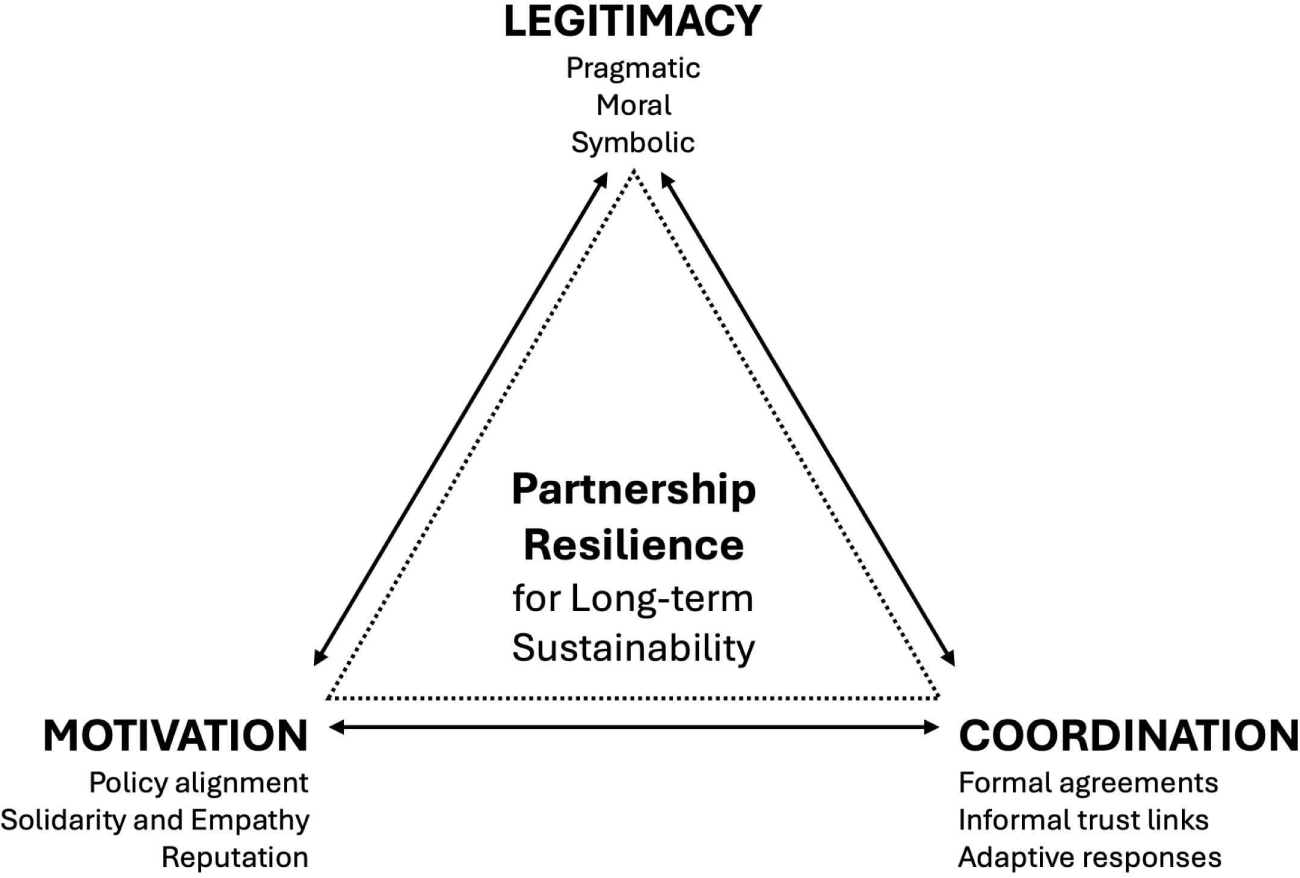
These dimensions are analytically distinct but mutually reinforcing: legitimacy shapes motivation; motivation drives coordination; coordination practices reproduce or weaken legitimacy. This recursive relationship, shown in <Figure 1>, offers a lens to interpret partnership performance beyond output indicators, focusing instead on processes that maintain cooperation under resource constraints. The framework guides the research design: stakeholder mapping addresses the who; documentary coding explores why actors engage and remain legitimate; and longitudinal analysis captures how coordination adapts across years. Together, these methods examine how legitimacy, motivation, and coordination co-evolve to produce the enduring humanitarian-development partnership embodied by VeP.
III. RESEARCH DESIGN AND METHODOLOGY
This study adopts a qualitative case study approach to examine VeP as an example of a MSP for EiE. Case study research is well-suited for exploring complex, context-dependent phenomena where multiple actors interact across institutional and sectoral boundaries (Yin, 2014). Focusing on a single initiative allows for an in-depth understanding of mechanisms, such as legitimacy building or motivational alignment, that cannot be captured by cross-sectional or purely quantitative approaches. The case-study approach was particularly suited to VeP because the program’s evolution depends on processes unfolding over time: annual cycles of recruitment, coordination, and feedback create a continuous loop between actors in Spain and in the Sahrawi camps. Capturing these iterative patterns required attention to temporal sequence, institutional context, and the relational nature of cooperation. The design is exploratory and explanatory. It seeks not to measure efficiency but to identify and interpret the underlying mechanisms that explain the partnership’s stability. It also responds directly to the call by Pattberg & Widerberg (2016) for more longitudinal, process-oriented analyses of partnerships in humanitarian and development settings.
Although VeP operates throughout Spain, each autonomous community manages its own implementation through local NGOs in coordination with the Sahrawi Delegation and Coordinadora Estatal de Asociaciones Solidarias con el Sáhara (CEAS)-Sáhara (the national umbrella network). To retain analytical depth, the study concentrates on the Balearic branch, coordinated by the Associació d’Amics del Poble Sahrauí de les Illes Balears (AAPSIB, 2023). This selection is theoretically and empirically justified on four grounds:
-
Continuity: Illes Balears has participated in VeP almost uninterruptedly for more than two decades, ensuring a sufficiently long temporal horizon for analysis.
-
Data richness: The region produces abundant publicly accessible documentation, including NGO annual reports, government grant records, and CSR statements from private collaborators.
-
Governance distinctiveness: As an island region with strong municipal autonomy, Illes Balears provides a microcosm of Spain’s decentralized cooperation model, facilitating observation of vertical and horizontal coordination.
-
Comparative representativeness: The Balearic case mirrors structural features of other regional branches (a central coordinating NGO, mixed funding, and stable volunteer base), allowing cautious analytical generalization (Yin, 2014).
The analysis covers the period 2011–2019, because (i) it offers the longest continuous sequence of program implementation before the COVID-19 disruptions and the diplomatic tensions of the early 2020s; (ii) it spans multiple political cycles at the regional level, providing variation in institutional context; and (iii) documentary availability is consistent throughout these years, enabling systematic cross-year comparison.
The study relies on documentary analysis of institutional sources that record VeP’s activities, resources, and coordination processes. Documentary research is well established in development studies as a rigorous method for reconstructing organizational behavior and institutional evolution when ethnographic or survey data are unavailable (Bowen, 2009; Scott, 2014). Three main document groups were analyzed:
-
Civil-society reports: Fourteen annual Reports of the AAPSIB (2023) from 2011–2019. Each report outlines objectives, participating families, medical and cultural activities, partner lists, and financial statements.
-
Public-sector documents: Nineteen items, including regional and municipal funding agreements, cooperation-policy plans, and IB-Salut memoranda covering medical examinations and insurance procedures.
-
Private-sector and media materials: Twenty-three CSR reports or news releases from clinics, optical centers, transport companies, and the Balearic airport authority (AENA, 2023), supplemented by local press coverage validating institutional claims.
All files were retrieved between October and December 2023 from institutional websites and official archives. Each document was catalogued in a spreadsheet noting year, issuing organization, document type, and page length. When multiple versions existed, the most updated and complete version was used. To mitigate self-reporting bias, secondary press coverage and CEAS-Sáhara newsletters (CEAS, 2023) were used to cross-check key events (e.g., charter flight delays, funding renewals). Where possible, budget amounts and partner names were verified across at least two independent sources.
The analysis combined qualitative content analysis with stakeholder mapping. Following the procedure described by Bryman (2016), textual data were coded using the NVivo 12 qualitative analysis software. The coding followed an iterative process.
An initial round of open coding identified references to (a) project activities, (b) stakeholder participation, and (c) financial flow. These categories were refined into thematic codes corresponding to the analytical dimensions developed in Section II: stakeholder composition, motivation and legitimacy, and coordination dynamics.
Stakeholders were classified according to their sectoral affiliation (public, civil society, or private) and role (funding, coordination, service delivery, or advocacy). The frequency and context of references to each actor were used as indicators of their degree of involvement. Although the documents differ in length and focus, their standardized annual format allows for cross-year comparisons.
Stakeholder mapping was then conducted to visualize the interconnections among actors. Recurrent collaborations and funding dependencies were identified using co-occurrence analysis within the dataset. These maps provide an empirical basis for assessing the stability or fluctuation of stakeholder networks over an eight-year period.
Given the reliance on documentary sources, particular attention was paid to ensuring the credibility and robustness of the analysis. Reliability was strengthened through source triangulation, cross-checking information from NGO reports against CSR statements, government records, and media coverage to confirm participation and funding details. Temporal triangulation across eight consecutive years reduced the influence of exceptional events or short-term fluctuations, allowing observation of recurring patterns. All coding decisions and excerpts were documented, enabling transparency and potential re-examination. Although documentary analysis cannot fully capture the informal and interpersonal dimensions of coordination, the consistency of reporting across independent institutional sources enhances confidence in the validity of the findings.
Because the dataset consists of institutional documents, the analysis focuses on reconstructing the institutional logics and recurring coordination mechanisms that the actors themselves considered important enough to document. These sources illuminate formal responsibilities, resource flows, and procedural routines, but they also provide indirect clues regarding less visible practices, such as volunteer mediation, informal problem-solving, or trust-based cooperation, through recurring references and patterned omissions. By reading the material longitudinally, the study traces how these mechanisms consolidate over time and how different actors frame their roles in the partnership’s evolution. This analytical choice complements, rather than replaces, empirical detail that first-hand interviews could provide, and it guides the interpretation presented here.
Within this framework, three limitations should nonetheless be acknowledged. First, data availability varied among actors: while public institutions and major corporations produced regular reports, smaller organizations and volunteer groups rarely did, resulting in partial visibility of their contributions. Second, institutional documents are inherently self-reported and may accentuate achievements or downplay difficulties; this bias was addressed through media verification and comparison among sources. Third, the study’s focus on a single region and timeframe constrains generalization beyond the Balearic case. Despite these constraints, the longitudinal and multi-source design provides a robust and contextually grounded understanding of the partnership’s structure, evolution, and coordination practices. This foundation supports the analysis presented in the next section, which examines stakeholder composition, motivations, and governance dynamics.
IV. FINDINGS AND ANALYSIS
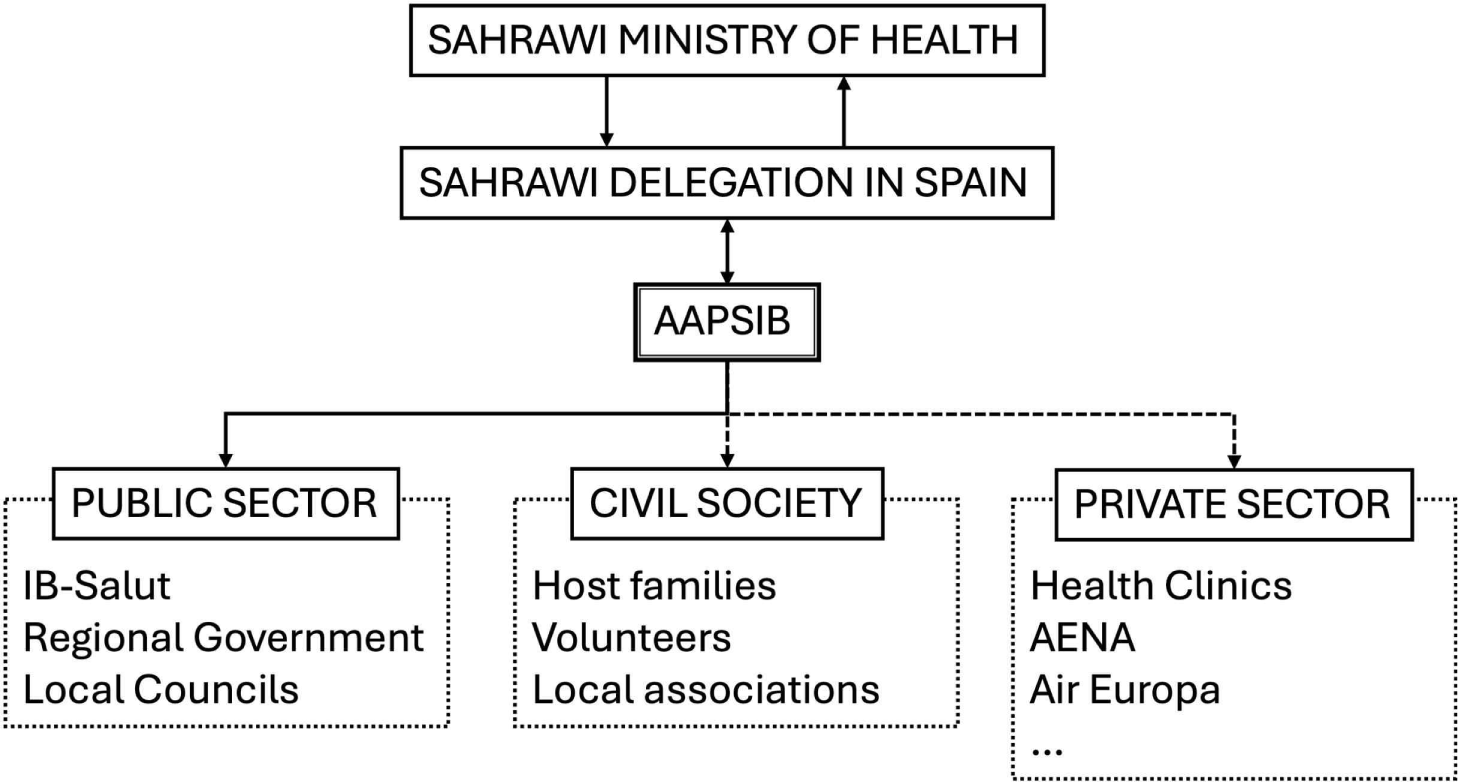
VeP operates as a decentralized, multi-level partnership linking Sahrawi refugee institutions with Spanish regional and local governments, NGOs, and private contributors. The national coordinating body, the Coordinadora Estatal de Asociaciones Solidarias con el Sáhara (CEAS-Sáhara), provides overall guidance, while regional associations implement local logistics in collaboration with the Delegación Saharaui para España. In Illes Balears, coordination is led by the AAPSIB, which acts as a boundary organization between host families, public institutions, and the Sahrawi delegation. AAPSIB manages the recruitment of host families, documentation, medical coordination, and communication with camp authorities. The regional government (Govern de les Illes Balears) and several municipal councils provide financial and logistical support, while the regional public health service (IB-Salut) ensures medical screening for all participating children.
This configuration reflects a hybrid coordination pattern that combines formal agreements (for funding and medical procedures) with informal, trust-based collaboration among volunteers and private actors. Over time, this arrangement has stabilized into a resilient local network (<Figure 2>).
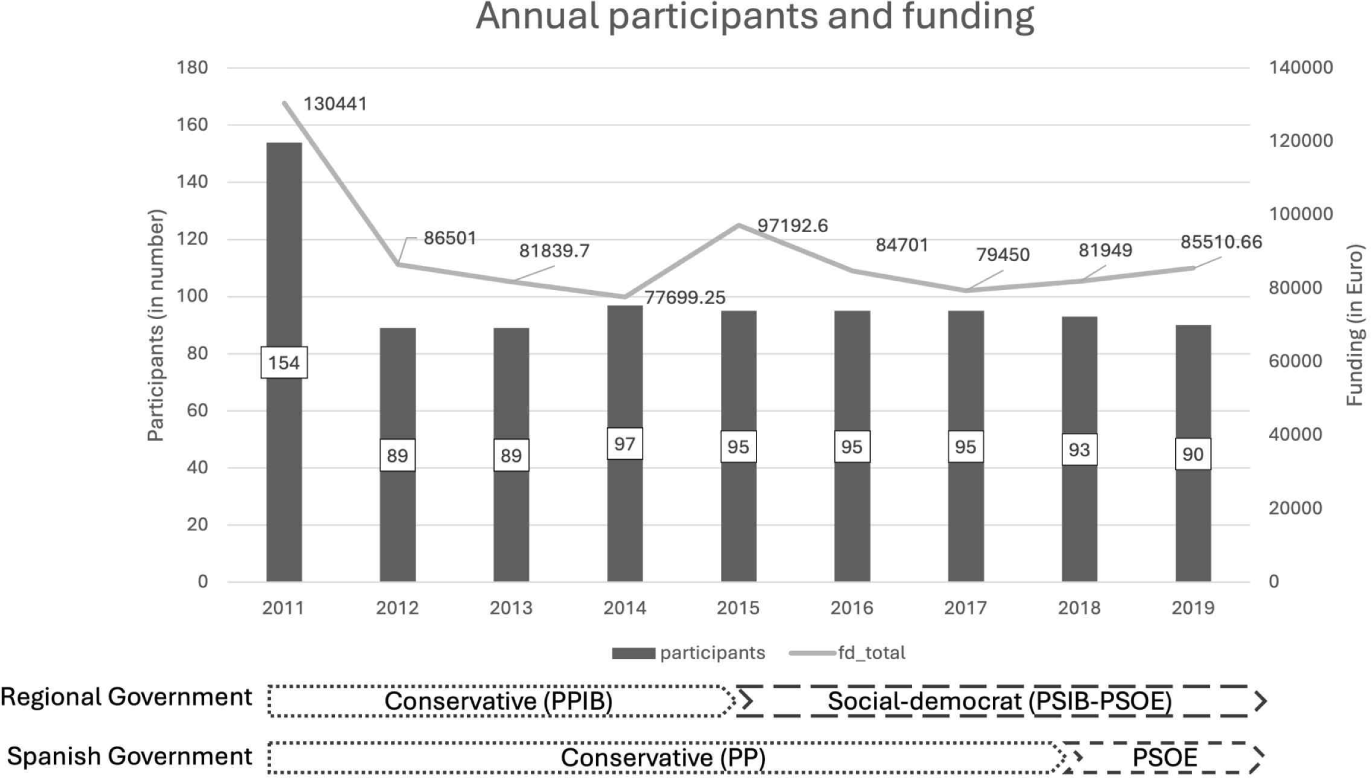
Between 2011 and 2019, VeP in Illes Balears hosted approximately 90–100 Sahrawi children each summer, depending on mutual agreements between the authorities, host-family availability, and the regional budget. This pattern is confirmed in AAPSIB’s annual reports, which record participation figures in the high 80s to mid-90s throughout the period, reflecting the program’s ability to maintain continuity despite fiscal austerity and political turnover.
As shown in <Figure 3>, after a dip in 2011 following the entry of the conservative party both at regional and national levels, funding patterns have mirrored this steady participation. As reported in their Cooperation Strategy documents, the regional government’s annual grants cover transportation, insurance, and administrative costs; municipal councils co-finance cultural activities. Private partners provide in-kind or CSR contributions (optical and dental services, logistical aid). Although the total budget fluctuated modestly year-to-year, no campaign was suspended during 2011–2019.
Public actors form the partnership’s institutional backbone. The Govern de les Illes Balears allocates regular cooperation grants to AAPSIB, usually on a yearly cycle aligned with budget approval. Municipalities contribute smaller but visible support: transport, cultural programming, and meeting facilities.
The regional health service IB-Salut institutionalized cooperation through annual agreements specifying roles and accountability. Medical teams perform general, dental, and ophthalmological examinations for every child, with specialist referrals when needed. This operational partnership between IB-Salut and AAPSIB embodies pragmatic legitimacy grounded in professional competence and transparency.
“All participating children received general, dental and ophthalmologic examinations coordinated with IB-Salut and volunteer clinics.”
(AAPSIB Annual Report, 2016)
Public authorities’ motivation blends normative (solidarity and human-rights commitment) and pragmatic (visible humanitarian impact) incentives. The program’s modest budget and positive media coverage make it a politically safe and socially rewarding cooperation tool.
Civil society, embodied by AAPSIB and a network of local solidarity committees, is the moral and relational core of VeP. Volunteers recruit host families, coordinate documentation, accompany medical appointments, and organize community events. Their engagement stems largely from ethical conviction and interpersonal solidarity rather than material incentives. AAPSIB’s continuity over decades has built relational legitimacy: public institutions trust its professionalism, and citizens identify it as a credible humanitarian intermediary. This reputation allows the NGO to mediate between bureaucratic and civic spheres, ensuring coherence without formal authority. Smaller associations complement this work by raising funds or awareness through school visits, fairs, and local media.
Municipal and project descriptions of VeP help to illustrate these civil-society roles in practice. Local municipalities report examples of children from the camps who each year leave the desert to spend the summer in Mallorca. Although they initially arrive without understanding the local language, after two months with a host family they are described as “totally integrated” into daily life and able to respond to what is asked of them (Santanyí, 2017). This kind of intensive, everyday accompaniment (sharing meals, supporting language learning, and integrating children into local activities) has long been central to the work of host families and volunteers. Reports additionally stress that the program involves sensitization campaigns, meetings with host families, medical check-ups and follow-up, and a final demonstration that brings together families, volunteers, and the children themselves, explicitly linking the hosting experience to broader public awareness of the Sahrawi cause and reinforcing the program’s moral-relational legitimacy.
Private participation is episodic but strategic. Clinics and optical centers donate examinations and lenses; pharmacies and laboratories provide materials; and transport companies and airport authorities contribute logistics. Their engagement rests on reputational and relational motivation: CSR alignment with humanitarian values enhances corporate image and employee pride. However, the absence of long-term agreements means participation fluctuates.
“Local clinics and opticians offered pro bono services for the VeP medical checks, renewing their commitment each summer.” (Clínica Baviera, 2023)
Although less visible, the private sector adds symbolic legitimacy that broadens the partnership’s social recognition and public visibility.
Public actors draw legitimacy from procedural transparency (competitive grant allocation, public reporting) and normative coherence (alignment with regional cooperation policies). Their motivation is partly reputational, showcasing Balearic commitment to solidarity, and partly instrumental, achieving cooperation goals within limited budgets. Regional cooperation with VeP reflects their institutional commitment to human rights and solidarity. Budget cuts in 2012–2013 tested this legitimacy, yet AAPSIB’s advocacy and cross-party support maintained continuity, illustrating how moral legitimacy can buffer pragmatic shocks.
Civil-society legitimacy rests on moral conviction and relational trust. The host-family experience transforms abstract solidarity into lived empathy, producing intrinsic motivation that survives funding fluctuations. AAPSIB capitalizes on this emotional connection through continuous communication, training, and transparent management. The association’s reputation for reliability functions as informal certification for public authorities and private donors alike. As AAPSIB Report from 2016 puts it, families’ generosity sustains a bridge of friendship beyond political cycles.
Private actors cultivate reputational legitimacy through CSR involvement. Their motivation is often framed in ethical and community terms (“returning social value to society”) rather than pure marketing. Because cooperation depends on personal networks, continuity hinges on key champions inside each company, creating flexibility but also vulnerability to turnover. This pattern illustrates what Glasbergen (2011) terms “ad hoc legitimacy,” where collaboration persists as long as reputational benefits outweigh the costs.
The partnership operates through a hybrid governance structure that combines hierarchical and network features. The AAPSIB functions as a coordinating hub, supported by formal agreements with the regional government and informal arrangements with private actors. Decision-making is consensus-based and guided by annual planning meetings before each summer campaign.
Three coordination modes were identified.
-
Coordination: Routine exchange of information and joint scheduling between the AAPSIB and public institutions.
-
Delegation: Entrusting specific tasks, such as medical examinations, to specialized entities like IB-Salut.
-
Mutual Adaptation: Flexible problem-solving during implementation, especially in logistics and crisis response.
These modes often co-exist. The absence of a formal steering committee allows for flexibility but also places heavy reliance on the NGO’s leadership capacity.
Communication follows both vertical and horizontal channels of communication. The AAPSIB reports annually to funders while maintaining continuous contact with host families and the Sahrawi delegation. Feedback from families serves as an informal monitoring mechanism that identifies issues related to health, adaptation, or logistics.
Formal accountability of the beneficiaries in the camps remains limited. Information rarely flows back to families after summer, reflecting the broader challenge of downward accountability in international cooperation. However, the program’s visibility in local media and its recurring success stories create a form of public scrutiny that reinforces responsibility.
Despite their overall stability, partnerships face recurring challenges.
-
Resource dependency: Heavy reliance on public grants limits financial autonomy.
-
Volunteer fatigue: Sustained engagement requires constant recruitment and motivation efforts.
-
Uneven private participation: The lack of continuity in sponsorship affects planning.
-
Information asymmetry: Coordination between the Spanish and Sahrawi sides depends on intermediaries, leading to occasional communication gaps.
These challenges do not threaten the program’s existence but constrain its potential for expansion and innovation.
Between 2011 and 2019, VeP in Illes Balears demonstrated remarkable continuity despite fiscal austerity and political turnover in the Spanish government. Document analysis revealed the stable involvement of key actors, with only minor fluctuations in funding levels. Three temporal phases can be distinguished.
-
Stabilization (2011–2013): Following national budget cuts in development cooperation, regional funding became the mainstay of the program. AAPSIB consolidated its administrative systems and formalized its cooperation with IB-Salut.
-
Diversification (2014–2016): Private sponsors and local councils increased their support, enabling complementary educational and cultural activities.
-
Adaptation (2017–2019): Renewed political shifts required advocacy to secure funding continuity, while the NGO strengthened community outreach to maintain the host family numbers.
Throughout these phases (summarized in <Table 1>), legitimacy and motivation were mutually reinforcing. Successive cycles of public endorsement and community participation have sustained the initiative, even under financial strain.
Overall, these findings yield three intertwined mechanisms that explain VeP’s endurance:
-
Complementary legitimacy: public (procedural/pragmatic), civic (moral/relational), and private (symbolic) forms reinforce one another.
-
Motivational reciprocity: altruistic volunteerism sustains public commitment, while visible institutional backing validates civic efforts.
-
Adaptive coordination: trust-based collaboration compensates for limited formal structures, allowing flexible responses to shocks.
These mechanisms illustrate how legitimacy and motivation operate as governing resources in humanitarian partnerships. When formal hierarchy is absent, legitimacy pluralism and motivational complementarity substitute for legal authority, producing what can be termed “pragmatic resilience”.
V. DISCUSSION
The findings demonstrate that the long-term continuity of VeP rests on the dynamic interaction among legitimacy, motivation, and coordination rather than on any single dimension alone. As illustrated in <Figure 1>, legitimacy diversity provides the foundation that attracts and retains heterogeneous actors; motivational complementarities sustain their engagement; and adaptive coordination mechanisms translate these impulses into collective action. The triangulation of documentary evidence from NGOs, government agencies, and media reports confirms that this interaction has reproduced partnership resilience across more than a decade.
The partnership’s durability depended first on its composite legitimacy. Public institutions contributed procedural and pragmatic legitimacy through formal agreements, funding, and institutional oversight, while civil associations supplied moral legitimacy anchored in humanitarian values and community trust. Private firms and foundations added reputational legitimacy by associating with a socially respected cause. As the findings showed, these different forms were not competing but mutually reinforcing: when governmental resources contracted during the 2012–2013 austerity period, the moral credibility accumulated by AAPSIB and the hosting families preserved social support and justified continued in-kind contributions. In theoretical terms, legitimacy heterogeneity compensated for fluctuations in any single source, validating the assumption that plural legitimacy enhances collective stability in MSPs.
This plural legitimacy activated distinct yet compatible motivations. Public actors were primarily driven by accountability and policy continuity, civil organizations by humanitarian commitment and social recognition, and private partners by reputational and relational returns. The findings revealed that these asymmetric motivations, instead of fragmenting the initiative, created a balance of short- and long-term incentives: pragmatic goals such as logistics and health screening relied on public routines, whereas the moral drive of volunteers maintained inter-annual engagement even when tangible benefits were limited. This pattern substantiates the framework’s claim that legitimacy diversity energizes complementary motivations, which in turn sustain participation despite uneven capacities or rewards.
The analysis identified a light meta-governance structure centered on AAPSIB that facilitated routine coordination without formal hierarchies. Annual planning meetings, role delegation to the regional health service, and constant informal communication between families and volunteers allowed the partnership to function with minimal bureaucracy. This configuration exemplifies adaptive coordination: low formalization preserved flexibility, while shared moral reference points provided coherence. At the same time, this reliance on minimal formalization and interpersonal trust generates a clear governance trade-off. The flexibility that enables rapid problem-solving and supports volunteer autonomy also weakens downward accountability and leaves important expectations, such as follow-up communication with the camps or criteria for task delegation, only partially specified. In practice, AAPSIB’s coordinators must therefore act as informal accountability mediators, translating concerns between families, public partners, and Sahrawi authorities in the absence of more detailed procedural guidelines. This case illustrates how informal governance can sustain continuity, but only by concentrating interpretive and relational responsibility in the hands of key civil-society actors. The empirical evidence of consistent pre-departure medical examinations and host-family matching across years supports the proposition that coordination is effective when legitimacy and motivation are already aligned. Coordination thus operationalized the legitimacy–motivation nexus, converting moral commitment into stable organizational routines.
These three dimensions reinforced one another through iterative feedback. Moral legitimacy inspired continuing volunteer motivation; repeated successful coordination, in turn, generated new legitimacy for public and private actors. For instance, the visibility of local solidarity events not only motivated host families but also legitimized public co-financing. Over time, the partnership produced a self-sustaining cycle in which successful coordination renewed the credibility and motivational energy that had initiated it. This process validates the triangular model represented in <Figure 1>.
While rooted in the Balearic Islands, the mechanisms observed here offer insights for other EiE MSPs. These insights can be operationalized in comparable settings by adopting VeP’s light meta-governance model: assigning a boundary NGO to coordinate volunteers and public services, using simple but recurring procedures (e.g., annual health checks, host-family screening), and relying on low-bureaucracy agreements with service providers. These design elements offer a practical template for EiE planners seeking to stabilize partnerships with limited resources. The VeP case shows that resilience emerges less from scale or resources than from the alignment of legitimacy bases, motivational asymmetries, and adaptive coordination. However, replication presupposes a dense civic environment and trustful relations among actors, conditions that may not exist in more fragmented or resource-scarce settings. Future comparative research could examine whether similar feedback dynamics operate in contexts where local associations are weaker or where institutional legitimacy is contested. Given the study’s reliance on documentary sources from a single regional branch, these implications should be interpreted as context-sensitive design hypotheses rather than universal prescriptions. The mechanisms identified: complementary legitimacy, motivational reciprocity, and adaptive coordination, are analytically transferable but may not apply in settings with weaker civic networks or contested institutional trust.
VI. CONCLUSION AND IMPLICATIONS
This study examined how the VeP program in the Balearic Islands region in Spain has sustained its operations for more than a decade through the interaction of legitimacy, motivation, and coordination. The analysis of documentary sources showed that partnership resilience emerges not from abundant resources or rigid governance, but from the adaptive alignment of heterogeneous actors around shared moral and procedural legitimacy. In VeP, the combination of public accountability, civic trust, and light meta-governance enabled the partnership to endure budget fluctuations and institutional changes while maintaining continuity of support for Sahrawi children.
Theoretically, the findings refine research on MSPs and EiE governance by identifying the mechanisms through which legitimacy diversity stabilizes collaboration, motivational asymmetry sustains engagement, and adaptive coordination translates commitment into routine practice. Legitimacy based on humanitarian credibility provided the moral foundation for long-term motivation, while repeated coordination routines (annual health checks, host-family matching, and volunteer training) converted those motivations into institutional memory. These mechanisms explain why VeP maintained coherence despite turnover among partner organizations.
Practically, several lessons arise for policy and program design. First, public agencies should formalize support through renewable framework agreements that guarantee logistical backing (e.g., medical screening, transport) without absorbing volunteer functions; this preserves flexibility while providing predictability. Second, municipalities and regional governments can use micro-grants or tax-deductible incentives to stabilize small civil organizations and private actors that provide relational and moral legitimacy to long-term humanitarian partnerships. Third, programs should establish simple feedback loops with origin-country partners. For example, short annual reports from Sahrawi health teams on children’s follow-up could strengthen downward accountability without bureaucratic overhead. Future research could compare similar community-anchored MSPs to assess whether these mechanisms operate under weaker civic or institutional legitimacy conditions.


